

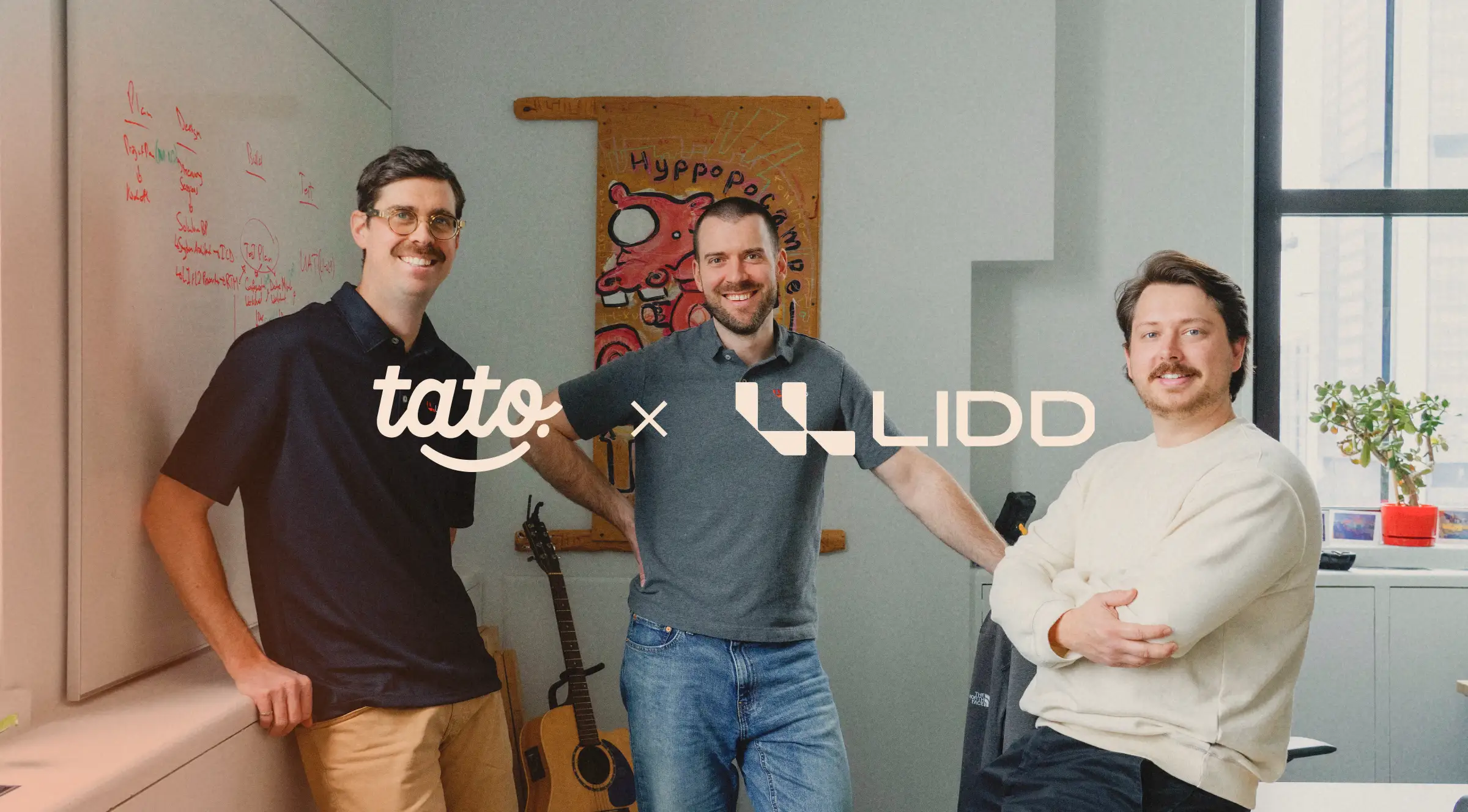
It's like having the perfect colleague who's always listening, always recording, and always taking notes for you.
Mathieu Galipeau
Partner, LIDD
Key results from LIDD's clients
Quicker answers, quicker decisions, quicker documentation: internal teams stop waiting on the SI to confirm what was said
The solution blueprint arrives at the start of configuration, not weeks into it, compressing the most expensive part of the project
A complete record of the project that doesn't live in any one consultant's head: your asset, not just theirs
A relationship with the SI that strengthens from the first discovery session instead of fraying through month seven
If you're about to sign an SOW for a Tier 1 ERP or supply chain implementation (Microsoft Dynamics 365 F&O, SAP S4/HANA, the integrations across all of it), ask this: how does that integrator run the project once the contract is signed? Specifically, how do they make sure what you told them in discovery still holds when configuration starts months later?
This is the story of how one supply chain consulting firm changed how they answer that question, and what it means for any executive sponsoring a project like yours.
Who LIDD is and why their answer matters to you
LIDD is a Montréal-based supply chain consulting firm. They run end-to-end projects across North America: designing warehouses, selecting and implementing the technologies that run them, and stitching the integrations together. Their typical engagement involves multiple workstreams in parallel: an ERP rollout, a WMS implementation, a CRM, and the integrations across the lot. Different teams, different deliverables, stakeholders who shift across the lifecycle.
Their projects look exactly like yours.
Mathieu Galipeau is a partner at LIDD. Romain is one of their directors. Both spend their days inside multi-month, multi-workstream projects where the gap between what a client says in a workshop and what gets built six months later is where most of the cost and friction lives.
A few months ago, they changed how they run those projects. The change is worth your attention for one reason: what it means for the executives on the other side of the table.
The challenge: what every executive sponsor is actually buying
The real risk in a Tier 1 ERP SOW is the gap between what was said and what was remembered. The technology can be right, the budget can look healthy, and the project can still derail in month seven because three people remember a May workshop three different ways.
Picture the rhythm. A discovery workshop happens Tuesday morning. By Friday, three people remember it three different ways. By month seven, someone can't find the conversation where the call was made, and the cost of reconstructing it is real: in dollars, in timeline, in trust.
Romain at LIDD named three pains every multi-workstream project runs into, and each one maps directly to where executive sponsors lose control.
Repetition. Teams re-asking the same questions, re-explaining decisions already made, burning hours on alignment instead of moving the project forward. The same fit-gap question (the workshop conversation about what the standard system does versus what your business actually needs) comes up in three different meetings because nobody can find what was said the first time. You're paying for those hours, twice and three times.
Lack of shared visibility. Different stakeholders working from different versions of the truth. Some with outdated context, some with no context at all. Decisions get made in silos that contradict decisions made in other silos. By the time someone catches the misalignment, weeks of work have happened on the wrong assumption, and the rework lands on your bill.
Incomplete documentation. Key decisions live in someone's head, in a half-finished workshop note, or in a Teams thread nobody can find again. Deliverables miss context. Project risk compounds silently. When the project hits a hard moment in month nine and you ask "what did we agree to in May?": nobody has a clean answer.
Every complex multi-team program runs into these, regardless of how good the SI is. They're inherent to running programs without infrastructure underneath. They're what quietly contributes to the 80% of ERP implementations that fail to hit time, budget, or scope.
You don't see them in the weekly status deck. You see them when something breaks.
The discovery session that should reshape how you think about kickoff
A few months ago, LIDD was running discovery sessions for a client implementing a WMS in a new warehouse. The client didn't have much time: an in-and-out on-site, a couple of days to understand requirements and leave with enough to start configuration.
In a traditional model, that compressed window is where projects start to suffer. The team comes off-site with notebooks of partial notes, three different mental models of what was said, and weeks of follow-up calls ahead just to confirm what was agreed. The blueprint takes shape slowly, requirement by requirement, and the cost of every misremembered detail shows up in configuration months later, usually as a change order on your desk.
What Tato allows us to do is to really focus our attention with the customer — understanding their requirements and solving the problem.
Romain
Director, LIDD
The team ran focused sessions on-site, gathered the solution, and Tato (an AI teammate that joins the meetings) captured everything. On the flight home, they produced the solution blueprint directly from those notes.
The client got an immediate response from those discovery sessions: a working document, ready to go into configuration, in the time it took to fly back.
For the executive sponsor on the other end, the most expensive part of an ERP project (the gap between discovery and configuration) just got compressed by weeks. The project starts on the right foot instead of already behind.
What changed for LIDD's clients
Mathieu frames Tato cleanly: it's like having the perfect colleague who's always listening, always recording, and always taking notes for you.
Tato runs through the work as a teammate, capturing every interaction and surfacing context when someone needs it. No extra login to manage, no dashboard to maintain. Here's what shows up consistently across LIDD's engagements once they brought Tato in:
Quicker answers, quicker decisions, quicker documentation
Your internal stakeholders, your subject matter experts, your super-users: they get answers faster. They're not waiting on LIDD to dig through notes to confirm what was said in a workshop two months ago. The record is there. They ask, they get the answer, they move on. The project moves at the speed of decisions, not at the speed of recall.
The blueprint arrives at the start, not in the middle
The discovery-to-blueprint cycle is where most ERP projects lose two to four weeks they never get back. When the blueprint comes out of a single on-site visit instead of weeks of follow-up calls, every downstream phase starts earlier. Configuration is the most expensive billable phase of an ERP project. Starting it on a complete blueprint instead of a partial one is one of the largest cost levers an executive sponsor has.
Fewer hours billed for clerical work
Your consultants spend less time on note-taking, summary-writing, and follow-up emails. The hours that used to disappear into clerical work come back. Those hours go into the work you're actually paying for: solutioning, design, configuration, problem-solving. The mix of what you're buying with each consultant hour shifts toward the part that delivers value.
A complete record that's yours, not theirs
This is the one most sponsors don't think about until they need it. When the project hits a hard moment (a scope dispute, a vendor disagreement, a question from your board about why something cost more than the SOW said), the question is always "what did we agree to?" In a traditional project, the answer lives in someone's notebook, somebody's inbox, somebody's memory. With Tato in place from the first discovery session, the answer lives in a complete record you can search. That changes the asymmetry of those hard moments. Quietly, but materially.
The relationship with your SI strengthens instead of fraying
This is the part that compounds across the lifecycle. Trust builds in moments, and every time the SI shows up holding the project as carefully as you wish you could yourself is one of them. Less repetition. Less "what did we say last time?" More "here's what we agreed, here's what comes next, here's the deliverable."
That changes how you feel about the program at month three, month seven, month twelve. Most SIs are good. What Tato does is strip away the friction they can't fully prevent on their own, and that friction is exactly what causes the relationship to fray when the project hits its hard moments.
Why this matters before you sign the SOW
There's a moment that happens on every Tier 1 ERP program, usually around month seven. Somebody asks a question that should have a clear answer: what did we decide about that integration in the May workshop? What was the agreed scope on that warehouse module? Nobody can find the answer cleanly. The SI's notes say one thing. Your team's recollection says another. The Teams thread is gone. Reconstructing it costs days, sometimes weeks. Sometimes it costs a change order.
That moment traces back to a decision at kickoff, or the absence of one: whether the project had infrastructure for capturing the full record from day one, or whether it was running on memory and meeting notes.
Tato was built with founders that have been system integrators. They understand the challenges that we have, why these projects fail, why these projects succeed.
Mathieu Galipeau
Partner, LIDD
The sponsors who feel that pain in month seven are the ones who didn't have the conversation about it at month zero. The sponsors who do have that conversation, who ask their SI how the project will be captured and treat the answer as a real signal about delivery quality, enter month seven with a different set of options.
You don't need to be the expert on the tools. You need to be the executive who asks the question.
Strategic takeaways for executive sponsors
The tools your SI uses to capture the project shape every cost line on your P&L for the next 18 months. Discovery clarity drives blueprint quality. Blueprint quality drives configuration speed. Configuration speed drives the timeline. The timeline drives the budget. It all traces back to whether what was said is still on the record when it matters.
Your weekly status deck and the actual project are two different things. What you see in the update is filtered, sometimes hours old, often shaped to read green. The actual project lives in workshops, hallway conversations, and decisions made in meetings you weren't in. Most SIs are good. The real question is whether the project has infrastructure that gives you visibility into what's actually happening, independent of who's writing the status report.
At kickoff, you have leverage you don't have later. Asking your SI about how the project will be captured, what tooling they use, and how decisions will be documented across workstreams is a normal kickoff conversation. Asking it in month seven is a confrontation. The smartest move an executive sponsor can make is to have that conversation early, when everybody's still on the same side of the table.
At a certain point, a business needs to implement an ERP to keep growing, to serve clients, to take on new sales channels. To deliver complex multi-workstream projects at that level, you need a tool like Tato. It's not really a question of what you say anymore. It's a question of what you're now able to do.
Mathieu Galipeau
Partner, LIDD